
How to Read a Tire DOT Code and Check Tire Age
That long code stamped on your sidewall tells you exactly when your tire was made — and whether it's time to replace it.
What Is the DOT Code?
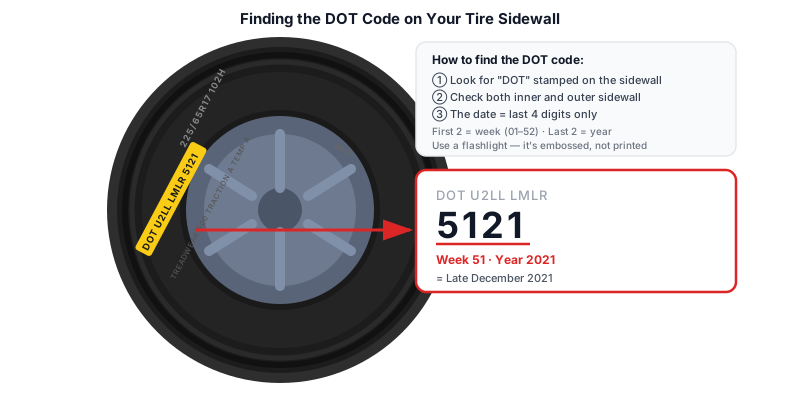
The DOT code (Department of Transportation) is a series of characters stamped on your tire's sidewall. It certifies the tire meets federal safety standards and — most importantly — encodes the manufacture date.
Example: DOT U2LL LMLR 5121
The last four digits are what you need: they tell you the week and year the tire was made.
How to Decode the Last 4 Digits
The formula is simple: the first two digits are the week of the year (01–52), and the last two digits are the year.
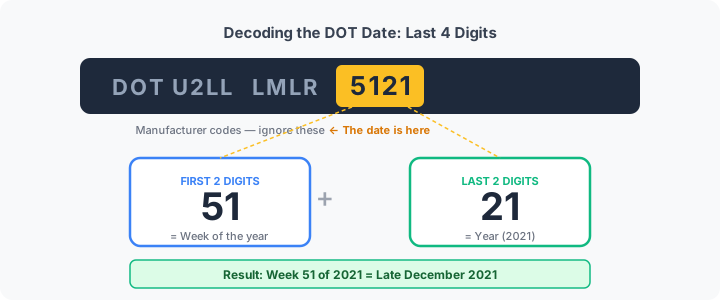
| DOT Ending | Week | Year | Manufacture Date |
|---|---|---|---|
| 5121 | 51 | 2021 | Late December 2021 |
| 0823 | 08 | 2023 | Late February 2023 |
| 1519 | 15 | 2019 | Mid April 2019 |
| 0120 | 01 | 2020 | First week of January 2020 |
How Old Is Too Old?
Even if a tire looks fine, rubber degrades over time due to heat, UV exposure, and oxidation — invisible from the outside.
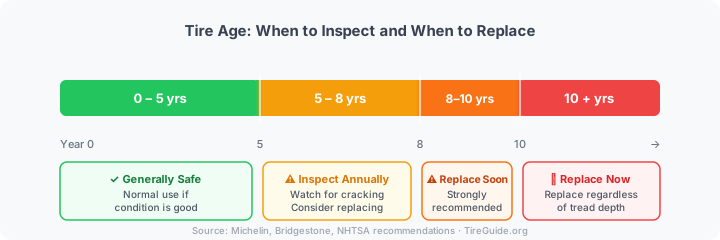
- Under 5 years: Generally safe if condition is good
- 5–10 years: Annual inspection recommended; consider replacing
- Over 10 years: Replace regardless of tread depth
Most tire manufacturers and safety experts recommend replacing tires at 6–10 years from the DOT date, even if they have plenty of tread left.
Where to Find the DOT Code
Look on the sidewall of your tire. On some tires, the full DOT code (including the date) is only on one side — you may need to look at both the inboard and outboard sidewall. The code always starts with "DOT". It is embossed (raised) into the rubber, not printed, so use a flashlight in low light.
Why This Matters When Buying New Tires
New tires can sit in warehouse storage for 1–3 years before being sold. Always check the DOT date when buying tires to make sure you're not buying old stock. A tire made in 2019 sold in 2024 already has 5 years on the clock before you've driven a single mile on it.
Frequently Asked Questions
Where is the DOT date code on my tire?
On the sidewall. Look for the text starting with 'DOT' — the last four digits of that sequence are the week and year of manufacture. It may only appear on one side of the tire.
My tires look fine but they are 8 years old. Do I need to replace them?
Most manufacturers recommend replacement at 6–10 years regardless of appearance. Rubber degrades internally in ways you cannot see. At 8 years, replacement is strongly advisable.
How do I find the manufacture date on a tire with only 3-digit DOT ending?
Three-digit DOT endings (e.g., 518) indicate tires made before 2000: first 2 digits = week, last digit = year of the decade. These tires are dangerously old and should be replaced immediately.
Is a tire with 2mm of tread but only 3 years old OK?
No — 2/32' (1.6mm) is the legal minimum but most experts recommend replacement at 4/32'. Tread depth matters more than age in this case; replace the tires.